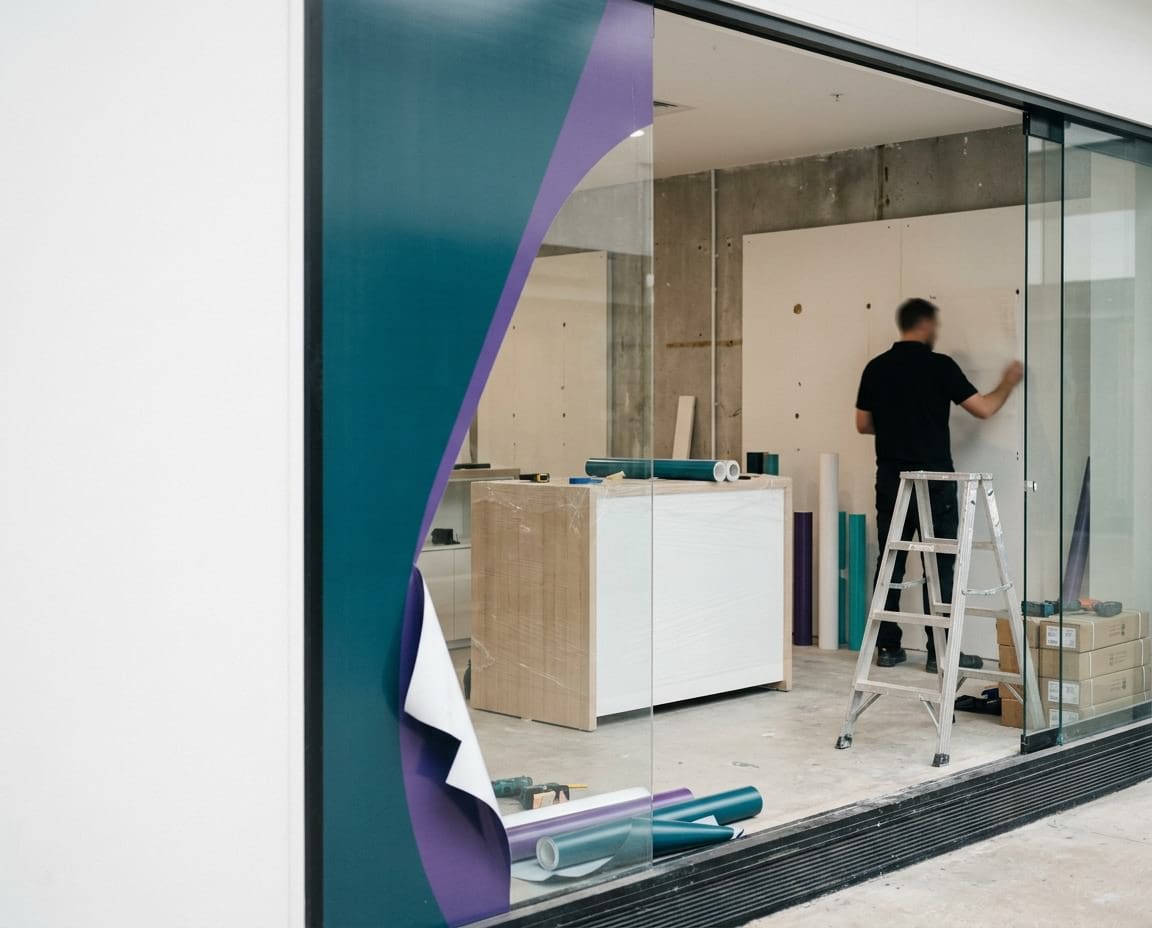
A pop-up shop lives or dies on its opening day, and almost everything that makes it work happens weeks before. Short leases, fixed dates and someone else’s building leave very little room for surprises. This pop-up shop checklist walks through the whole job, from the first conversation with the landlord to handing back the keys.
We design, print, make and fit shop graphics, displays and point of sale in-house, and we also work as a production and fitting partner for design agencies and shopfitters. For the full picture, see our shop installs, pop-ups and POS page.
Landlord rules, insurance and licences
Start with the unit and the landlord
Before anything is designed, find out exactly what you are allowed to do. Every landlord and shopping centre has its own rules, and they shape the whole plan. Ask for them in writing, and ask:
- When do you get the keys, and when must the unit be handed back?
- What can be fixed to walls, floors, ceilings and glass, and what has to be freestanding?
- Are there approved contractors, install hours or loading bay bookings?
- What insurance does the centre require, and at what level of cover?
- What condition must the unit be returned in?
- Are there rules on window graphics, signage and lighting?
Visit the unit in person, measure every wall, window and fixture, and photograph everything, including existing damage. Those photos protect you when you hand the unit back.
Insurance, licences and permissions
Check your own insurance covers trading from a temporary unit, and get public liability cover in place if the landlord asks for it. Then check what your products and activities need:
- Food: a new food business must register with the local council, and councils advise doing this at least 28 days before you start trading.
- Alcohol: selling alcohol needs a premises licence or, for a short event, a Temporary Event Notice from the council.
- Outdoor signs: a sign or graphic on the outside of a high street unit can need advertisement consent. Our guide to shop sign planning permission explains when.
- Street trading: anything that spills onto the pavement can need separate consent from the council.
Ask the council early. Licensing and consents run to their own timetables, not yours.
Set a budget that includes the end
Most pop-up budgets cover the opening and forget the closing. Split yours into clear headings so nothing gets squeezed at the last minute:
| Budget heading | What it covers |
|---|---|
| Unit | Rent, service charge, utilities, insurance |
| Build | Fixtures, counters, shelving, lighting |
| Graphics | Window graphics, hoardings, wall graphics, signage |
| Point of sale | Displays, plinths, price and shelf graphics |
| Install and removal | Fitting, dismantling, making good, waste |
| Staff and running | Wages, stock, card machines, Wi-Fi |
| Contingency | Usually needed, always appreciated |
Layout and customer flow
A pop-up is usually small, so every metre needs a job. Draw the layout on a plan of the real unit, then walk it as a customer would:
- The threshold: keep the first couple of metres inside the door open, so people step in without feeling trapped.
- The hero: put your key product or offer where people look first as they enter.
- The route: guide people round, not just in and out.
- The till: place it where staff can see the door and the floor.
- The photo moment: give people one spot worth photographing and sharing.
Window graphics, hoardings and signage
The window is the hardest working advertising space in the unit. It needs to stop people from across the street and tell them, in a second, what you are and why to come in. Keep it bold and simple, and leave clear areas so people can see the product inside.
If the unit is being fitted out behind closed doors, a printed hoarding or full window wrap turns that dead time into a teaser campaign: your brand, the opening date and a reason to come back. On launch day the hoarding comes down and the real window takes over.
Glass doors and full-height glazing inside the unit also need marking so nobody walks into them. Our guide to window manifestation rules covers the heights and contrast.
POS, fixtures, lighting and power
Point of sale and fixtures do the selling once people are inside. Plan them around the products, not the other way round.
- Displays and plinths: choose freestanding pieces where the landlord limits wall fixings.
- Shelf strips, price graphics and product cards: clear, consistent and easy to update.
- Wall graphics: big brand moments on the walls behind the counter and at the back of the unit.
- Lighting: check what the unit already has. Many empty units come with flat, tired lighting, and a few well-aimed spotlights on the hero products make a huge difference.
- Power: count the sockets and note where they are before planning tills, screens and lit displays.
- Wi-Fi and payments: test the signal in the unit itself. Card machines that drop out on opening day cost sales.
The board you choose for each graphic matters too. Our guide to Foamex, Correx, Dibond and acrylic explains which suits which job.
Staff, install and removal planning
Brief your staff on the brand, the products and the story behind the pop-up before opening day, and walk them round the finished unit.
Then plan the install like a timetable. Agree access times, parking, lifts and who holds the keys. Graphics usually go up first, then fixtures and displays, then stock. Finish with a full walk-through against the approved layout and fix any snags before the doors open.
Plan the removal at the same time as the install. Agree who takes everything down, how adhesive residue comes off the glass and walls, where reusable pieces go, and how the unit is handed back. Photograph the empty unit at the end, just as you did at the start.
Reuse materials and measure success
A pop-up does not have to start from scratch every time. Design fixtures, counters and freestanding displays to be packed down and reused, and keep the graphics that are not tied to one date or location. The second pop-up costs less and goes up faster.
Decide what success looks like before you open, so you know what to count:
- Footfall through the door each day
- Sales, average spend and best sellers
- New email or social sign-ups
- Social posts, tags and mentions from the unit
- Feedback from customers and staff on what worked
Those numbers tell you whether to run the next pop-up, where and for how long.
Planning a pop-up shop?
We design, print, make and fit pop-up graphics, displays and POS from our studio in Aylesbury, for brands across Buckinghamshire, the Home Counties and London. See our shop installs, pop-ups and POS page and our print and display page, or call us on 01296 399202.
Leave a Reply Cancel reply
Put your brand on everything.
Your brand doesn't stop at the screen. Sign Rite Grafix puts it on your vehicle, your windows, your walls, your pop-up, wherever it needs to be seen. If you can picture it, they can make it and fit it.
FROM THE DIGITAL WORLD TO THE REAL ONE



comment on this post